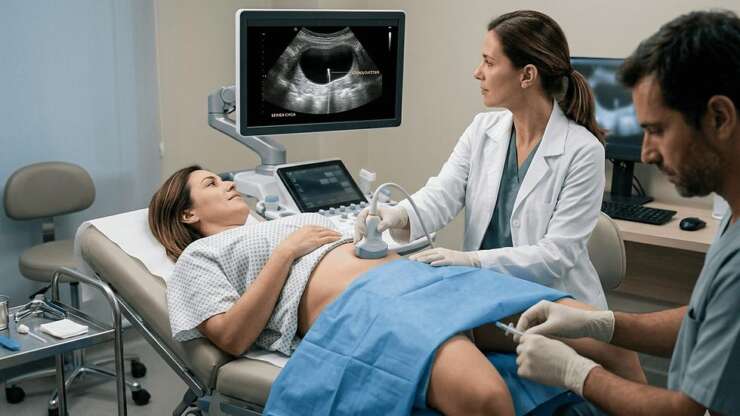
Polycystic Ovary Syndrome, commonly known as PCOS, is one of the most common hormonal conditions affecting women of reproductive age. It is also one of the leading causes of infertility. Yet despite how common it is, many women do not fully understand what PCOS is, how it affects fertility, or what can be done about it. For some women, PCOS…
For many women trying to conceive, the menstrual cycle becomes a monthly guide — a way to track ovulation, predict fertile days, and plan for pregnancy. But when cycles are irregular, that sense of predictability disappears. Irregular menstrual cycles are one of the most common concerns in fertility care. They can make ovulation difficult to track, reduce the chances of…
When people think about fertility, they often focus on age, lifestyle, or current health conditions. But one important factor is sometimes overlooked: Family history. Your genetic background and inherited health patterns can quietly shape your reproductive health long before you begin trying to conceive. Understanding your family history does not mean something is wrong — it simply provides insight into…
When people think about fertility, they often focus on age, hormones, or medical conditions. But one powerful factor is frequently overlooked: Nutrition. The body relies on a steady supply of vitamins, minerals, and essential nutrients to regulate hormones, support egg and sperm quality, and maintain a healthy environment for conception and pregnancy. When key nutrients are lacking — even slightly…
For many couples, the journey to parenthood is guided not only by the desire to conceive, but also by the hope of having a healthy child. When one or both partners carry a genetic disorder — or have a family history of inherited conditions — this journey can feel more complex, uncertain, and emotionally challenging. Questions often arise: Will we…
When couples begin investigating fertility challenges, one of the first and most important steps is hormone testing. Hormones act as the body’s internal communication system — controlling ovulation, sperm production, menstrual cycles, implantation, and early pregnancy support. When these signals are disrupted, fertility can be affected in subtle or significant ways. Understanding hormone testing helps you move from confusion to…
For couples trying to conceive, timing is everything. Many people assume that pregnancy can happen at any time during the menstrual cycle. In reality, there is only a small window each month when conception is most likely to occur — and that window is directly linked to ovulation. Understanding and tracking ovulation can significantly improve the chances of getting pregnant,…
Few experiences are as emotionally painful and confusing as losing a pregnancy — especially when it happens more than once. After two or more miscarriages, many couples begin asking difficult questions: Why does this keep happening? Is something wrong with my body? Will we ever carry a pregnancy to term? What treatments are available? Recurrent pregnancy loss (RPL) is not…
Fertility treatment is not only a medical journey.It is an emotional one — often slow, uncertain and quietly exhausting. Many people begin treatment hopeful and motivated. But when cycles stretch into months or years, test results fluctuate, and plans change repeatedly, emotional strength can wear down. Even the most supportive families and caring partners may not fully understand what the…
When couples struggle to conceive, attention is often placed on the ovaries, the uterus, sperm quality, or age. However, one small, butterfly-shaped gland in the neck quietly controls many of the systems that make reproduction possible — the thyroid gland. Thyroid problems are common, frequently overlooked, and can affect both women and men at every stage of the fertility journey…