

When people think about fertility, they often focus on age, hormones, or medical conditions. But one powerful factor is frequently overlooked:
Nutrition.
The body relies on a steady supply of vitamins, minerals, and essential nutrients to regulate hormones, support egg and sperm quality, and maintain a healthy environment for conception and pregnancy.
When key nutrients are lacking — even slightly — fertility can be affected in ways that are not always obvious.
This article explores how nutrition deficiencies influence fertility, which nutrients matter most, how deficiencies develop, and what steps can support reproductive health.
Why nutrition matters for fertility


Fertility is an energy-intensive and hormonally regulated process.
For conception to occur, the body must:
- produce balanced reproductive hormones
- support egg maturation and ovulation
- maintain healthy sperm production
- prepare the uterine lining for implantation
- support early embryo development
All of these processes depend on adequate nutrition.
When nutrients are lacking, the body may:
- prioritise survival over reproduction
- disrupt hormone balance
- reduce egg and sperm quality
- impair implantation
What are nutrition deficiencies?
A nutrition deficiency occurs when the body does not get enough of a specific nutrient to function optimally.
This may be due to:
- poor diet quality
- restrictive eating patterns
- chronic illness
- digestive issues affecting absorption
- increased nutrient needs
- lifestyle factors such as stress
Importantly, deficiencies can exist even in people who appear healthy or have normal body weight.
How nutrition deficiencies affect female fertility
1. Hormonal imbalance
Nutrients play a direct role in hormone production.
Deficiencies can disrupt:
- estrogen levels
- progesterone production
- ovulation signals
This may lead to:
- irregular cycles
- absent ovulation
- difficulty maintaining pregnancy
2. Poor egg quality
Egg development begins months before ovulation.
Nutrient deficiencies can affect:
- cellular energy production
- DNA integrity
- resistance to oxidative stress
This may reduce egg quality and fertilisation potential.
3. Weak uterine lining
For implantation to occur, the uterine lining must be:
- thick enough
- well supplied with blood
- hormonally responsive
Certain nutrients support this process.
Deficiencies may result in:
- poor implantation
- early pregnancy loss
How nutrition deficiencies affect male fertility
Male fertility is equally influenced by nutrition.
Deficiencies may lead to:
- low sperm count
- poor sperm motility (movement)
- abnormal sperm shape
- increased DNA damage
Sperm production is continuous, and nutrient shortages can affect each cycle of sperm development.
Key nutrients that play a role in fertility
1. Iron
Iron supports:
- oxygen transport
- energy production
- ovulation
Low iron levels may contribute to:
- fatigue
- irregular ovulation
- reduced fertility
Iron deficiency is common, especially in women with heavy menstrual bleeding.
2. Folate (Vitamin B9)
Folate is essential for:
- DNA synthesis
- cell division
- early embryo development
Low folate levels may:
- affect egg quality
- increase risk of early pregnancy complications
Folate is also critical before and during early pregnancy.
3. Vitamin D
Vitamin D acts like a hormone in the body.
It supports:
- reproductive hormone balance
- ovarian function
- immune regulation
Low vitamin D levels have been associated with:
- ovulation problems
- reduced fertility
- poorer outcomes in fertility treatment
4. Zinc
Zinc is important for:
- hormone production
- egg development
- sperm formation
Deficiency may lead to:
- reduced sperm quality
- hormonal imbalance
- delayed ovulation
5. Omega-3 fatty acids
These healthy fats support:
- hormone regulation
- blood flow to reproductive organs
- reduction of inflammation
They may improve:
- egg quality
- uterine environment
- sperm health
6. Vitamin B12
Vitamin B12 works with folate in:
- DNA formation
- red blood cell production
Deficiency may affect:
- ovulation
- embryo development
- overall reproductive health
7. Selenium
Selenium is an antioxidant that supports:
- thyroid function
- protection of reproductive cells
Deficiency may affect:
- sperm quality
- hormonal balance
8. Iodine
Iodine is essential for thyroid hormone production.
Thyroid hormones regulate:
- metabolism
- menstrual cycles
- ovulation
Low iodine intake may contribute to:
- thyroid dysfunction
- fertility challenges
9. Magnesium
Magnesium supports:
- hormone balance
- stress regulation
- muscle relaxation
Low levels may:
- increase stress response
- affect menstrual cycle stability
Hidden causes of nutrition deficiencies
Many people assume deficiencies only occur in extreme cases. In reality, they are often subtle and widespread.
Common hidden causes include:
1. Processed and low-quality diets
Diets high in:
- refined carbohydrates
- sugary drinks
- processed foods
may lack essential nutrients even when calorie intake is sufficient.
2. Digestive and absorption issues
Conditions affecting the gut may reduce nutrient absorption, including:
- chronic inflammation
- gut infections
- food intolerances
3. Chronic stress
Long-term stress can:
- affect digestion
- alter nutrient metabolism
- increase nutrient requirements
4. Restrictive diets
Very low-calorie or restrictive eating patterns may lead to:
- multiple deficiencies
- hormonal disruption
5. Increased nutritional needs
Certain conditions increase demand for nutrients, including:
- trying to conceive
- pregnancy preparation
- chronic illness
Signs that nutrition may be affecting fertility
Possible indicators include:
- irregular menstrual cycles
- fatigue or low energy
- hair thinning or brittle nails
- pale skin
- frequent infections
- difficulty conceiving without clear medical cause
These signs are not always specific but may suggest underlying deficiencies.
Can improving nutrition restore fertility?
In some cases, yes.
Correcting deficiencies can:
- restore ovulation
- improve hormone balance
- enhance egg and sperm quality
- support implantation
However, nutrition alone may not resolve all fertility issues, especially when structural or genetic factors are involved.
How nutrition is assessed in fertility care
Evaluation may include:
- blood tests for vitamin and mineral levels
- dietary assessment
- medical history
- lifestyle evaluation
Testing helps identify specific deficiencies rather than guessing.
The role of supplements
Supplements can help correct deficiencies when:
- diet alone is insufficient
- levels are significantly low
However:
- self-prescribing high doses can be harmful
- not all supplements are necessary for everyone
Supplements should be used based on medical guidance.
Practical ways to support fertility through nutrition
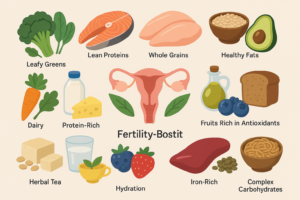
1. Focus on whole, nutrient-rich foods
Include:
- leafy vegetables
- fruits
- whole grains
- legumes
- nuts and seeds
- healthy fats
- lean protein
2. Maintain balanced meals
Each meal should ideally include:
- protein
- healthy fats
- complex carbohydrates
This supports stable blood sugar and hormone balance.
3. Stay hydrated
Water supports:
- circulation
- nutrient transport
- overall cellular function
4. Limit highly processed foods
Reducing processed foods helps improve nutrient intake naturally.
5. Support gut health
Healthy digestion improves nutrient absorption.
This may include:
- fibre-rich foods
- fermented foods
- adequate hydration
Emotional aspects of nutrition and fertility
Many people feel pressure to “eat perfectly” when trying to conceive.
This can lead to:
- anxiety around food
- guilt after eating certain foods
- unrealistic expectations
It is important to remember:
- fertility is influenced by many factors
- nutrition supports fertility but does not guarantee outcomes
- balance is more important than perfection
When should you seek help?
Consider professional guidance if:
- you have difficulty conceiving
- you suspect nutritional deficiencies
- you have symptoms of fatigue or hormonal imbalance
- you follow a restrictive diet
- you have known medical conditions affecting absorption
Early support can prevent long-term deficiencies.
Final thoughts
Nutrition deficiencies are often hidden contributors to fertility challenges.
They may not be obvious, but they can quietly affect:
- hormone balance
- egg and sperm quality
- implantation
- overall reproductive health
The encouraging news is that nutrition is one of the most modifiable aspects of fertility.
With the right awareness, proper evaluation, and targeted support, many nutritional imbalances can be corrected — helping to create a healthier foundation for conception and pregnancy.
Fertility is not only about treatment.
It is also about nourishing the body in a way that supports life from the very beginning.