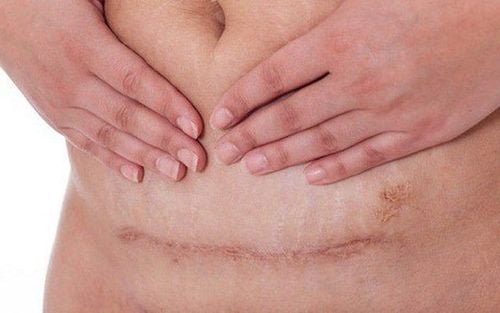
For many women, a cesarean section (C-section) is a life-saving and necessary way to deliver a baby.
But after recovery, a very common and often unspoken question quietly follows:
“Will having a cesarean section affect my ability to get pregnant again?”
The honest answer is this:
For most women, a previous cesarean section does not prevent future pregnancy.
However, it can influence how easily conception happens, how future pregnancies are monitored, and what risks need to be carefully considered.
This article explains — in a clear, non-alarming and practical way — how cesarean delivery may affect fertility, what complications are possible, what symptoms to watch for, and how to protect your reproductive health moving forward.
What exactly happens during a cesarean section?


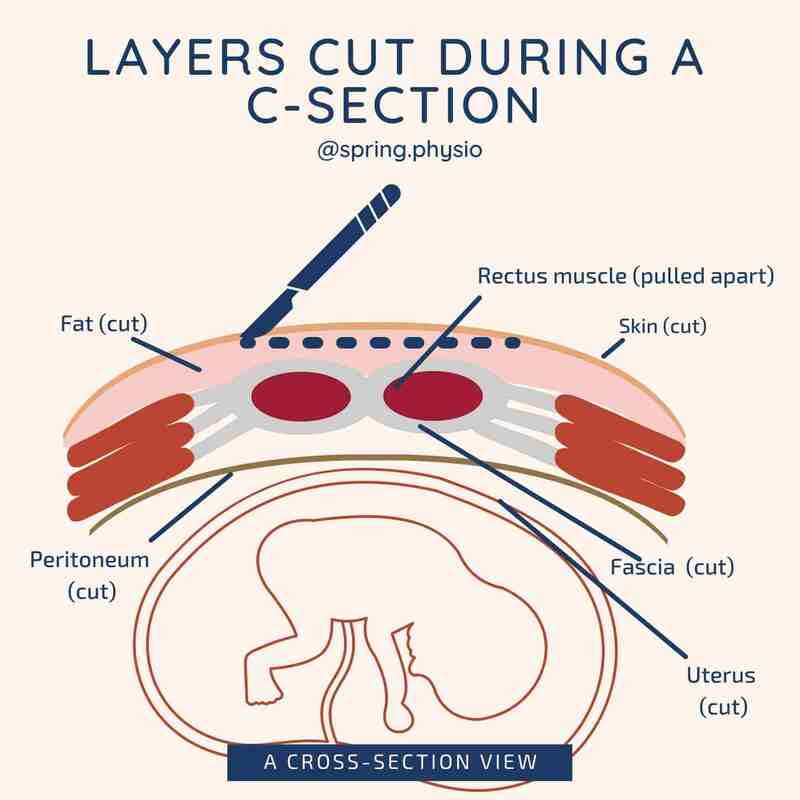
A cesarean section is a surgical procedure in which:
-
the abdominal wall is opened
-
the uterus is opened
-
the baby is delivered through that opening
Although the skin scar is what most people see, the more important healing takes place inside the uterus itself.
That internal uterine scar is what matters most for future fertility and pregnancy.
Can you still get pregnant after a C-section?
Yes.
Most women who have had a cesarean section go on to conceive again naturally.
A previous C-section does not:
-
stop ovulation
-
stop your periods
-
block fertilisation
-
prevent your ovaries from working
However, the surgery can sometimes lead to changes inside the pelvis and uterus that may influence how easily pregnancy occurs.
How a previous cesarean can affect fertility
The effect of a cesarean on future fertility is usually indirect.
It does not affect the eggs or hormones.
It affects the uterine environment and the surrounding pelvic structures.
The main issues include:
1. Scar tissue (adhesions)

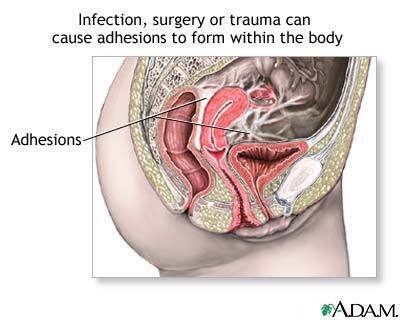
After any abdominal surgery, including a C-section, the body heals by forming scar tissue.
Sometimes this scar tissue creates adhesions — bands of tissue that can cause organs to stick together.
Adhesions may:
-
involve the uterus
-
involve the bladder
-
involve the ovaries
-
involve the fallopian tubes
When adhesions affect the fallopian tubes or ovaries, they may:
-
reduce egg pick-up by the tubes
-
interfere with tubal movement
-
increase the risk of tubal blockage
This can make natural conception more difficult in some women.
Not all women develop problematic adhesions, but they are one of the most important possible links between cesarean delivery and later fertility challenges.
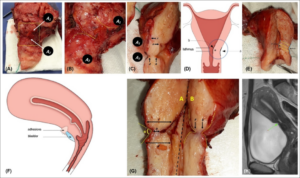
2. Cesarean scar defect (isthmocele)
A cesarean scar defect is a small pouch or indentation at the site where the uterus was closed after surgery.
This defect can:
-
collect menstrual blood
-
interfere with normal uterine contractions
-
affect the lining of the uterus
Some women with a cesarean scar defect may experience:
-
prolonged brown discharge after menstruation
-
irregular bleeding
-
pelvic discomfort
-
difficulty conceiving
The exact mechanism is still being studied, but the altered uterine environment may reduce implantation efficiency in some women.
3. Changes in the uterine lining
For pregnancy to begin, the embryo must implant into a healthy, receptive uterine lining.
In rare situations, scarring close to the uterine cavity may:
-
alter blood flow to parts of the lining
-
reduce implantation quality
-
affect how the lining develops each cycle
This does not happen to most women, but it is sometimes considered during fertility evaluation.
4. Infection after cesarean delivery
If a woman had a significant infection after her cesarean section, the risk of pelvic inflammation and adhesions may increase.
This can indirectly affect:
-
tubal function
-
pelvic anatomy
-
implantation
Again, this is not common — but it is clinically relevant.
Does the number of cesarean sections matter?
Yes.
The risk of internal scarring and uterine changes tends to increase with:
-
repeated surgeries
-
complicated surgeries
-
prolonged labour before emergency cesarean
-
infection during or after surgery
Women who have had:
-
two or more cesarean sections
may have a higher likelihood of adhesions and scar-related problems compared to women with only one uncomplicated cesarean.
How long should you wait before trying to conceive after a C-section?
Most doctors recommend waiting:
at least 12–18 months before attempting another pregnancy after a cesarean section.
This allows:
-
proper healing of the uterine muscle
-
stronger scar formation
-
reduced risk of complications in the next pregnancy
This waiting period is important not because of fertility itself, but because of future pregnancy safety.
Fertility after C-section vs vaginal birth
Overall fertility rates between women who have had:
-
a previous vaginal delivery
-
and a previous cesarean delivery
are very similar.
The difference arises only when scar-related complications are present.
Most women who experience delayed conception after cesarean delivery usually have:
-
other contributing fertility factors
-
or undiagnosed pelvic conditions
The cesarean alone is rarely the only cause.
What symptoms after a cesarean should raise concern?
You should consider medical evaluation if you notice:
-
persistent pelvic pain
-
pain during intercourse
-
irregular bleeding
-
prolonged spotting after periods
-
unexplained secondary infertility (difficulty conceiving after previously giving birth)
-
repeated early pregnancy losses
These symptoms may suggest:
-
adhesions
-
scar defects
-
or uterine abnormalities
Can a cesarean affect implantation?
It can — but only in a small subset of women.
When a cesarean scar defect or scar-related distortion of the uterine cavity is present, implantation may be affected by:
-
altered uterine contractions
-
poor clearance of menstrual blood
-
inflammation around the scar area
-
disrupted endometrial development
This may lead to:
-
delayed implantation
-
failed implantation
-
early pregnancy loss
However, most women with previous cesarean deliveries implant normally.
Can a previous C-section increase the risk of ectopic pregnancy?
Some studies suggest a slightly increased risk of ectopic pregnancy after cesarean delivery.
This may be linked to:
-
pelvic adhesions
-
altered tubal movement
A very rare form of ectopic pregnancy — implantation within the cesarean scar itself — can also occur.
Although rare, this is a serious condition and requires early diagnosis.
Fertility treatment after cesarean section
Women who require fertility treatment after a cesarean section generally respond well to treatment.
However, clinics may:
-
carefully assess the uterine cavity
-
examine the cesarean scar region
-
evaluate tubal patency
-
assess pelvic anatomy with imaging
This ensures that implantation conditions are optimal before advanced treatment is started.
Can a cesarean scar be repaired to improve fertility?
In selected cases where a significant cesarean scar defect is identified, surgical correction may be considered.
This is usually reserved for women who have:
-
persistent abnormal bleeding
-
repeated implantation failure
-
unexplained infertility linked to a visible scar defect
The decision must be individualised and made by a specialist experienced in reproductive surgery.
Future pregnancy risks that matter for fertility planning
Even if conception occurs normally, previous cesarean delivery may increase certain risks in later pregnancies, including:
-
abnormal placental attachment
-
placenta covering the cervix
-
abnormal placental invasion into the uterine wall
-
uterine rupture during labour (rare but serious)
These risks increase mainly with:
-
multiple prior cesareans
-
short intervals between pregnancies
Understanding these risks helps couples plan pregnancies safely.
Emotional concerns after cesarean delivery and fertility
Many women silently carry emotional fear after a cesarean section, especially if the delivery was:
-
traumatic
-
unexpected
-
associated with complications
Some women worry:
-
their bodies have failed
-
pregnancy is now dangerous
-
they may not be able to carry again
These fears can increase stress and delay fertility planning.
Emotional reassurance and proper counselling are important parts of post-cesarean fertility care.
What you can do to protect your fertility after a cesarean
You cannot erase a surgical scar — but you can protect your reproductive health.
Helpful steps include:
-
attending proper postnatal follow-up
-
reporting persistent pain or abnormal bleeding early
-
avoiding unnecessary pelvic infections
-
maintaining healthy body weight
-
managing chronic medical conditions
-
planning appropriate spacing between pregnancies
-
seeking fertility evaluation early if conception is delayed
When should you seek fertility evaluation after a C-section?
If you are under 35 and have been trying to conceive for 12 months without success — or over 35 and trying for 6 months — you should consider fertility evaluation, regardless of delivery history.
However, you should seek earlier assessment if:
-
you have abnormal bleeding patterns
-
you have persistent pelvic pain
-
you have known surgical complications from your cesarean
-
you have had more than one cesarean
-
you previously conceived easily but now cannot
A very important clarification
Many women blame their cesarean section when they face difficulty conceiving again.
In reality:
-
fertility problems are often multifactorial
-
age, ovulation issues, male factors, and lifestyle still play large roles
-
the cesarean scar is only one possible contributor
A careful and balanced evaluation is essential before drawing conclusions.
Final thoughts
Fertility after a cesarean section is usually normal.
Most women go on to conceive and carry healthy pregnancies without difficulty.
However, because cesarean delivery is major abdominal and uterine surgery, it can occasionally create internal changes that affect fertility and implantation.
Understanding these possibilities empowers women to:
-
recognise symptoms early
-
seek appropriate evaluation
-
plan pregnancies more safely
-
reduce unnecessary fear and blame
If you have had a previous cesarean and are planning another pregnancy, the most important step is not to worry — but to be informed, monitored, and supported.
Your fertility journey after a cesarean is still very much possible — and for most women, very hopeful.