


Introduction
In vitro fertilization (IVF) has transformed the lives of millions of individuals and couples facing infertility. One of the most important stages of an IVF cycle is embryo transfer—the moment when a carefully selected embryo is placed into the uterus with the hope of achieving pregnancy.
Over the years, advances in reproductive medicine have changed when embryos are transferred during IVF. While embryos were traditionally transferred on Day 2 or Day 3 after fertilization, many fertility clinics now recommend transferring embryos on Day 5 or Day 6, when they have developed into a blastocyst.
Blastocyst transfer has become a widely used strategy because it can help embryologists identify embryos with stronger developmental potential and better synchronize embryo development with the uterus. However, it is not the best option for every IVF patient, and understanding both its benefits and limitations is essential before making treatment decisions. Professional fertility societies note that blastocyst transfer may improve implantation and live birth rates in appropriately selected patients, but it also has laboratory and clinical considerations that require individualized planning.
This guide explains what a blastocyst is, how blastocyst transfer works, who may benefit from it, potential risks, the difference between Day 3 and Day 5 transfers, and what patients should expect throughout the process.
What Is a Blastocyst?


A blastocyst is an embryo that has developed for approximately five to six days after fertilization. At this stage, the embryo has grown from a small cluster of cells into a more complex structure containing about 70–200 cells.
Unlike a Day 3 embryo, where the cells are relatively similar, a blastocyst has distinct structures that will later develop into different parts of the pregnancy.
The Three Main Parts of a Blastocyst


|
Blastocyst Structure |
Future Role |
|
Inner Cell Mass (ICM) |
Develops into the fetus (baby). |
|
Trophectoderm |
Develops into the placenta and supporting pregnancy tissues. |
|
Blastocoel |
Fluid-filled cavity that allows the embryo to expand before implantation. |
This stage closely resembles the embryo’s natural developmental stage when it enters the uterus during natural conception.
Understanding Embryo Development During IVF


The journey from fertilization to blastocyst happens over several days.
Timeline of Embryo Development
|
Day |
Embryo Development |
|
Day 0 |
Egg is fertilized by sperm. |
|
Day 1 |
Single-cell embryo (zygote). |
|
Day 2 |
Embryo divides into 2–4 cells. |
|
Day 3 |
Embryo reaches the cleavage stage with 6–8 cells. |
|
Day 4 |
Cells compact into a morula. |
|
Day 5–6 |
Embryo becomes a blastocyst. |
During IVF, embryologists carefully monitor embryo growth every day using specialized incubators and microscopes. Some embryos continue developing into blastocysts, while others naturally stop growing before reaching this stage.
What Is Blastocyst Transfer in IVF?


Blastocyst transfer is an IVF procedure where a Day 5 or Day 6 blastocyst is transferred into the uterus instead of transferring an earlier-stage embryo.
Rather than transferring embryos shortly after fertilization, the fertility laboratory continues culturing them for several additional days.
Why Wait Until Day 5?
Waiting allows embryologists to observe:
-
Which embryos continue developing normally.
-
Which embryos stop developing.
-
Which embryos show the strongest developmental potential.
The goal is to select an embryo with a greater likelihood of successful implantation while transferring fewer embryos whenever appropriate.
How Blastocyst Transfer Fits Into the IVF Process
Understanding the entire IVF journey helps explain where blastocyst transfer occurs.
Step 1: Ovarian Stimulation


Hormone medications stimulate multiple eggs to mature during one menstrual cycle.
Doctors monitor:
-
Follicle growth.
-
Hormone levels.
-
Timing of ovulation.
Step 2: Egg Retrieval


Mature eggs are collected from the ovaries using a minimally invasive procedure.
Step 3: Fertilization


Eggs are fertilized using either:
-
Conventional IVF.
-
Intracytoplasmic Sperm Injection (ICSI).
Step 4: Embryo Culture


Embryos grow inside carefully controlled incubators for several days.
Only some embryos successfully develop into blastocysts.
Step 5: Blastocyst Transfer


A selected blastocyst is gently placed into the uterus using a thin catheter.
The procedure is:
-
Usually painless.
-
Does not require surgery.
-
Often completed within minutes.
Step 6: Pregnancy Testing


Approximately 9–14 days later, a blood test measures beta-hCG to determine whether implantation occurred.
Why Do Fertility Clinics Prefer Blastocyst Transfer?


Blastocyst transfer became popular because embryo development naturally provides additional information.
Some embryos appear healthy on Day 3 but stop developing before Day 5.
Allowing embryos to develop longer may help identify embryos that continue progressing normally. This approach can improve embryo selection in many IVF programs.
Benefits of Blastocyst Transfer
1. Better Embryo Selection


One major advantage is the ability to observe embryo development for a longer period.
Benefits include:
-
More information about embryo growth.
-
Identification of embryos with stronger developmental potential.
-
Improved selection for transfer or freezing.
Not every embryo reaches the blastocyst stage, and this natural progression helps embryologists make informed decisions.
2. Higher Implantation Potential Per Embryo


Research suggests that transferring a well-developed blastocyst often results in higher implantation rates per embryo transferred compared with transferring embryos at earlier stages in appropriately selected patients.
This means fewer embryos may need to be transferred
3. Better Synchronization With the Uterus

![[Video] Chuyển phôi ngày 5 tỉ lệ thành công cao không? | Vinmec](https://images.openai.com/static-rsc-4/oguc7WWFrLllm6hDAqRw-Gjl7Fl1AnmiUVIQdk0fHrs4F5PBTjiyMD4VCQd1UDMo2cau8PHcXuF2-krvc_mKrZmSSk_JU-LE7qjW8Opm2rLHSdfz3piyhQfxhe_Nni3G2Jd19wMMMC3zRK2M3Hj2H5s6XasGxveaqDbjdkJWZPg?purpose=inline)

During natural conception:
-
The embryo reaches the uterus around Day 5.
-
Implantation begins shortly afterward.
Blastocyst transfer closely mimics this natural timing, improving synchronization between embryo and endometrium.
4. Supports Single Embryo Transfer


Because blastocysts often have higher implantation potential, many clinics recommend elective single embryo transfer (eSET) whenever appropriate.
Benefits include reducing the likelihood of twins or higher-order multiple pregnancies while maintaining good pregnancy chances for selected patients.
5. Better Opportunity for Embryo Freezing


High-quality blastocysts can be frozen using vitrification for future IVF cycles.
Frozen blastocysts may later be transferred without repeating ovarian stimulation or egg retrieval.
6. Useful for Genetic Testing (PGT)


Blastocyst-stage embryos are typically required for many forms of Preimplantation Genetic Testing (PGT).
Benefits include:
-
Screening embryos for specific genetic conditions when appropriate.
-
Helping identify embryos suitable for transfer in selected medical situations.
PGT does not guarantee pregnancy but provides additional information in eligible cases.
Day 3 vs Day 5 Blastocyst Transfer


Choosing between Day 3 and Day 5 transfer depends on individual circumstances.
|
Day 3 Embryo Transfer |
Day 5 Blastocyst Transfer |
| Embryo has about 6–8 cells. | Embryo has 70–200 cells. |
| Transfer occurs earlier. | Transfer occurs after extended culture. |
| Less information about embryo development. | More developmental information available. |
| May be recommended when fewer embryos exist. | Often preferred when several embryos are developing well. |
| Embryo still developing in uterus. | Embryo closer to implantation stage. |
Evidence suggests blastocyst transfer may improve fresh transfer live birth rates in patients with a favorable prognosis, but Day 3 transfer remains appropriate in some situations.
Who May Benefit Most From Blastocyst Transfer?


Blastocyst transfer may be especially considered for patients who:
Have Several Healthy Embryos
More embryos provide greater opportunity to observe development through Day 5.
Younger Women With Good Ovarian Reserve
Patients producing multiple embryos often have more embryos available for blastocyst culture.
Patients Planning Single Embryo Transfer
Blastocyst transfer supports eSET strategies.
Patients Undergoing Genetic Testing
Blastocysts are commonly used for embryo biopsy before PGT.
Previous IVF Cycles With Multiple Embryos
Extended culture may provide additional embryo selection information.
Treatment decisions remain individualized.
When Blastocyst Transfer May Not Be the Best Option


Blastocyst transfer is not automatically recommended for everyone.
Situations where earlier transfer may be considered include:
Very Few Embryos Available
If only one or two embryos are available, continuing culture carries a possibility that none will reach the blastocyst stage.
Poor Embryo Development
Embryologists monitor development daily.
Certain Previous IVF Histories
Previous treatment outcomes help guide decisions.
Laboratory Factors
Successful blastocyst culture requires highly experienced embryology laboratories.
How Blastocysts Are Graded


Blastocysts receive grades based on their appearance under a microscope.
Components of Blastocyst Grading
|
Grading Component |
Meaning |
| Expansion Stage | How expanded or hatched the blastocyst is. |
| Inner Cell Mass | Quality of cells expected to become the fetus. |
| Trophectoderm | Quality of cells expected to become the placenta. |
Example Grades
|
Grade |
General Interpretation |
| 4AA | Excellent appearance. |
| 4AB | Very good appearance. |
| 3BB | Good quality appearance. |
| 5AA | Expanded, high-quality blastocyst. |
Important Note
Embryo grading estimates appearance and developmental characteristics.
It does not guarantee implantation or a successful pregnancy.
Day 5 vs Day 6 Blastocysts


Some embryos become blastocysts on Day 5.
Others develop on Day 6.
|
Day 5 Blastocysts |
Day 6 Blastocysts |
| Reach blastocyst stage earlier. | Reach blastocyst stage one day later. |
| Often transferred fresh. | Often frozen and transferred later. |
| Frequently used for PGT. | Also commonly used for PGT. |
Many healthy pregnancies result from both Day 5 and Day 6 blastocysts.
The timing alone does not determine pregnancy success.
Fresh Blastocyst Transfer vs Frozen Blastocyst Transfer


|
Fresh Transfer |
Frozen Transfer (FET) |
| Embryo transferred during the IVF cycle. | Embryo frozen and transferred later. |
| No freezing required. | Uses vitrified blastocyst. |
| Suitable when uterine lining is ready. | Useful if hormone levels suggest delaying transfer. |
| Pregnancy test occurs shortly after transfer. | Transfer happens in a later prepared cycle. |
Many clinics individualize whether fresh or frozen transfer is preferable.
What Happens During a Blastocyst Transfer Procedure?


The procedure is usually straightforward.
Before Transfer

Patients may be asked to:
-
Arrive with a comfortably full bladder.
-
Continue prescribed medications.
-
Review embryo information with the fertility team.
During Transfer
The embryologist loads the blastocyst into a tiny catheter.
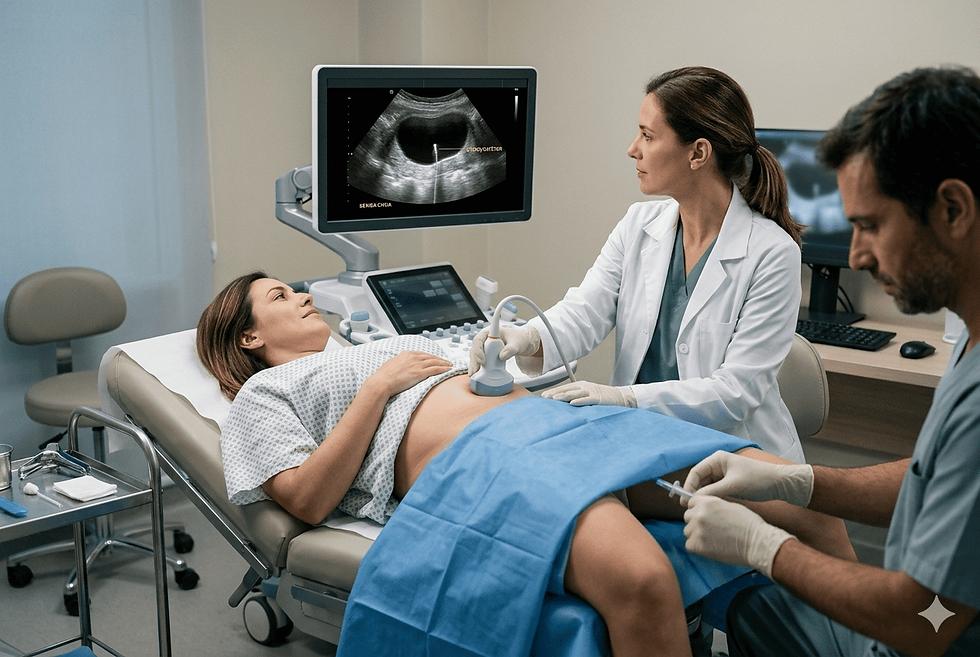
The doctor guides the catheter into the uterus using ultrasound.
The blastocyst is gently released into the uterine cavity.
The procedure usually takes only a few minutes.
After Transfer


Most patients resume light daily activities shortly afterward.
Doctors typically recommend continuing prescribed hormone medications until pregnancy testing.
What Happens After Blastocyst Transfer?


After transfer, the embryo continues developing inside the uterus.
Possible Timeline After Transfer
|
Days After Transfer |
Possible Development |
| Day 1 | Blastocyst continues expanding. |
| Day 2 | Hatching from outer shell may begin. |
| Day 3–5 | Implantation into uterine lining may begin. |
| Day 6–9 | Early implantation continues. |
| Day 9–14 | Beta-hCG blood testing may detect pregnancy. |
Signs You May Experience After Blastocyst Transfer


Some patients notice symptoms.
Possible symptoms include:
-
Mild cramping.
-
Light spotting.
-
Breast tenderness.
-
Fatigue.
-
Bloating.
-
No symptoms at all.
Important Reminder
Symptoms cannot reliably confirm whether implantation has occurred.
A blood pregnancy test provides the most accurate answer.
Success Rates: What Influences Blastocyst Transfer Outcomes?


Success depends on many factors.
Factors That Influence Outcomes
|
Factor |
Why It Matters |
| Maternal age | Egg quality changes with age. |
| Embryo quality | Healthy embryos generally have higher implantation potential. |
| Uterine lining | Endometrial receptivity supports implantation. |
| Sperm quality | Contributes to embryo development. |
| Laboratory quality | Embryo culture conditions affect blastocyst development. |
| Underlying fertility diagnosis | Different conditions respond differently to IVF. |
Evidence suggests improved implantation and fresh live birth rates with blastocyst transfer in many patients with a favorable prognosis, but success is never guaranteed.
Possible Risks and Considerations of Blastocyst Transfer


While blastocyst transfer offers advantages, it also has limitations.
1. Not Every Embryo Reaches Day 5


Some embryos naturally stop developing before becoming blastocysts.
This means:
-
No blastocyst may be available for transfer.
-
Fewer embryos may remain for freezing.
2. Risk of Cycle Cancellation


If embryos arrest before Day 5:
-
Fresh transfer may not occur.
-
Frozen transfer may not be possible from that cycle.
3. Small Increased Chance of Identical Twins


Research suggests a small increase in monozygotic (identical) twinning with blastocyst transfer compared with earlier embryo transfer, although the absolute risk remains low.
4. Pregnancy Complications Still Require Monitoring


Blastocyst transfer improves embryo selection in some patients.
However, routine prenatal care remains essential throughout pregnancy.
How Doctors Decide Between Day 3 and Day 5 Transfer


Doctors evaluate multiple factors together.
Questions Your Fertility Team Considers
-
How many eggs were retrieved?
-
How many embryos fertilized normally?
-
How many embryos are still developing?
-
Have you had previous IVF cycles?
-
What is your age?
-
What is your ovarian reserve?
-
Is a fresh or frozen transfer more appropriate?
There is no universal best day for embryo transfer.
The recommendation is personalized.
How to Prepare for Blastocyst Transfer


Patients can prepare by following their clinic’s instructions.
Before Transfer
-
Take medications exactly as prescribed.
-
Stay hydrated.
-
Eat balanced meals.
-
Avoid smoking.
-
Limit alcohol if advised.
-
Discuss supplements with your doctor.
Emotional Preparation


The waiting period can be emotionally challenging.
Helpful strategies include:
-
Mindfulness.
-
Gentle exercise.
-
Talking with supportive family or friends.
-
Professional counseling when needed.
Lifestyle Habits That Support Implantation


Although lifestyle cannot guarantee implantation, healthy habits support overall reproductive health.
Recommended Habits
|
Lifestyle Habit |
Potential Benefit |
| Healthy diet | Supports hormone balance and overall health. |
| Moderate exercise | Supports circulation and well-being. |
| Adequate sleep | Supports hormone regulation. |
| Stress management | Supports emotional health during treatment. |
| Prenatal vitamins | Provide important nutrients before pregnancy. |
Frequently Asked Questions About Blastocyst Transfer
Is Blastocyst Transfer Better Than Day 3 Transfer?

It may improve implantation and live birth rates in certain patients, particularly those with multiple developing embryos and favorable IVF prognosis. However, it is not automatically the best strategy for everyone.
Can a Poorly Graded Blastocyst Still Result in Pregnancy?
Yes.
Embryo grading estimates appearance, not certainty.
Lower-graded blastocysts have resulted in healthy pregnancies.
Is Bed Rest Required After Blastocyst Transfer?


Most fertility clinics encourage returning to normal light activities rather than prolonged bed rest unless individualized medical advice says otherwise.
Does Blastocyst Transfer Guarantee Pregnancy?
No.
Successful pregnancy depends on embryo quality, uterine receptivity, maternal age, overall reproductive health, and other biological factors.
How Many Blastocysts Are Usually Transferred?


Many clinics recommend transferring one blastocyst when appropriate to reduce the risk of multiple pregnancy while maintaining strong pregnancy potential.
Myths About Blastocyst Transfer
|
Myth |
Fact |
| Blastocyst transfer guarantees pregnancy. | No IVF method can guarantee pregnancy. |
| Every embryo should be cultured until Day 5. | Some patients benefit more from earlier transfer depending on embryo number and clinical history. |
| Only perfect embryos become blastocysts. | Blastocysts vary in quality, and pregnancies can occur from different grades. |
| Day 6 blastocysts cannot produce healthy babies. | Many successful pregnancies result from Day 6 blastocysts. |
| Blastocyst transfer is a completely different fertility treatment. | It is simply one embryo transfer strategy within IVF. |
When Should You Discuss Blastocyst Transfer With Your Fertility Specialist?


A discussion about blastocyst transfer is especially important if you:
-
Are preparing for your first IVF cycle.
-
Have several embryos developing after fertilization.
-
Have experienced previous IVF implantation failure.
-
Are considering genetic testing (PGT).
-
Want to understand fresh versus frozen embryo transfer.
-
Want to reduce the risk of twins through single embryo transfer.
Every IVF cycle is unique, and decisions should be tailored to your reproductive history and laboratory findings.
Final Thoughts
Blastocyst transfer represents one of the most significant advances in modern IVF. By allowing embryos to develop until Day 5 or Day 6, fertility specialists gain additional insight into embryo development and can often select embryos with stronger implantation potential. This approach also aligns more closely with the embryo’s natural timing of entering the uterus and has made single embryo transfer an increasingly effective strategy for many patients.
However, blastocyst transfer is not a one-size-fits-all solution. While it offers important advantages for many individuals and couples, it also carries considerations such as the possibility that some embryos will not survive extended culture and that patients with very few embryos may be better served by an earlier transfer. The decision between a Day 3 and Day 5 transfer should always be based on individualized medical assessment, embryo development, age, ovarian reserve, previous IVF history, and the expertise of the fertility laboratory.
For patients undergoing IVF, understanding blastocyst transfer can make treatment decisions less overwhelming and foster realistic expectations. Working closely with a qualified fertility specialist ensures that embryo transfer timing is tailored to maximize the chances of a healthy pregnancy while prioritizing safety for both mother and baby.